## What Is Web Hosting?
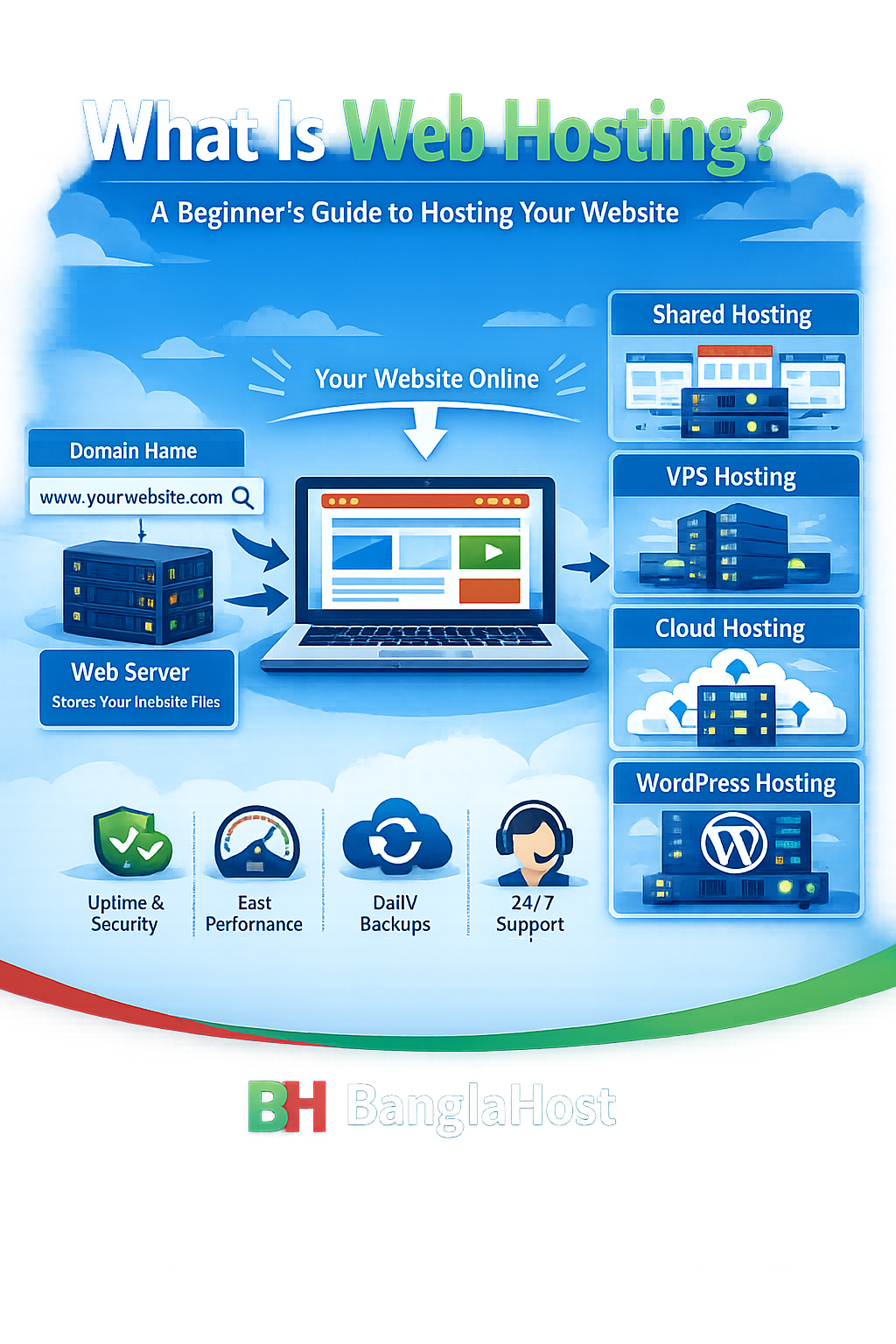
Web hosting is a service that allows individuals and businesses to publish their websites on the internet. When you purchase a hosting plan, a hosting provider stores your website files, images, databases, and content on powerful servers that remain connected to the internet 24/7.
Without web hosting, your website cannot be accessed by visitors online.
Think of web hosting as renting space on a computer that is always online. This computer is called a server, and it delivers your website to users whenever they visit your domain name.
---
## How Does Web Hosting Work?
When someone types your domain name into their browser, the following process occurs:
1. The browser sends a request to your hosting server.
2. The hosting server locates your website files.
3. The server processes the request.
4. Your website content is displayed in the visitor's browser.
This entire process usually happens within milliseconds.
For example:
Domain Name:
https://banglahostbd.com/
Hosting Server:
Stores website files, databases, emails, and applications.
Website:
The content visitors see online.
---
## Why Do You Need Web Hosting?
Every website requires hosting to be accessible online.
Web hosting provides:
* Website storage
* Fast loading speeds
* Security protection
* Daily backups
* Email hosting
* Website uptime
* Technical support
* Database management
Whether you run a personal blog, business website, eCommerce store, or corporate portal, hosting is essential.
---
## Different Types of Web Hosting
### 1. Shared Hosting
Shared hosting is the most affordable hosting option.
Multiple websites share the same server resources, making it ideal for:
* Beginners
* Personal websites
* Small businesses
* Blogs
Advantages:
* Low cost
* Easy management
* Beginner friendly
Disadvantages:
* Limited resources
* Performance can vary during traffic spikes
---
### 2. VPS Hosting
VPS (Virtual Private Server) hosting provides dedicated resources within a virtual environment.
Suitable for:
* Growing websites
* Online stores
* Medium-sized businesses
Advantages:
* Better performance
* More control
* Improved security
Disadvantages:
* Higher cost than shared hosting
* Requires some technical knowledge
---
### 3. Cloud Hosting
Cloud hosting uses multiple servers working together.
Suitable for:
* High-traffic websites
* Scalable applications
* Growing businesses
Advantages:
* Excellent uptime
* Flexible scaling
* High performance
Disadvantages:
* Variable pricing
* More complex setup
---
### 4. Dedicated Server Hosting
A dedicated server provides an entire physical server for one customer.
Suitable for:
* Large enterprises
* High-traffic websites
* Resource-intensive applications
Advantages:
* Maximum performance
* Full server control
* Enhanced security
Disadvantages:
* Expensive
* Requires server administration knowledge
---
### 5. WordPress Hosting
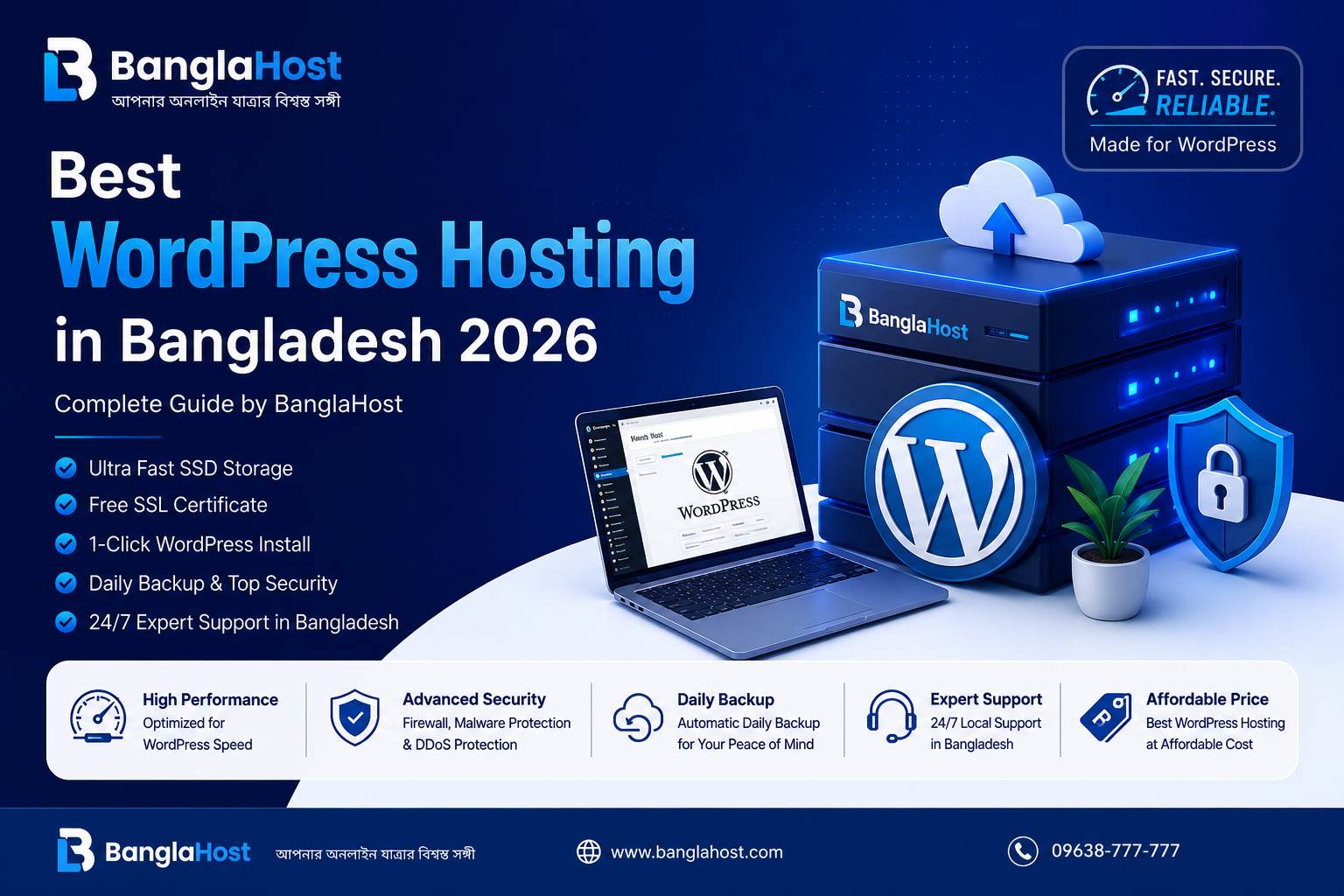
WordPress hosting is specifically optimized for WordPress websites.
Advantages:
* Faster WordPress performance
* Automatic updates
* Enhanced security
* Easy management
Perfect for bloggers, businesses, and online stores using WordPress.
---
## Important Features to Look for in a Hosting Provider
Before choosing a hosting provider, consider:
### Uptime Guarantee
Look for at least 99.9% uptime.
### Fast Storage
NVMe SSD storage significantly improves website speed.
### Security
Features should include:
* SSL certificates
* Malware scanning
* DDoS protection
* Firewalls
### Backups
Daily automated backups help protect your website data.
### Customer Support
24/7 support is essential when issues arise.
### Scalability
Choose a hosting provider that allows easy upgrades as your website grows.
---
## Difference Between Domain and Hosting
Many beginners confuse domains and hosting.
### Domain Name
A domain is your website's address.
Example:
[www.banglahostbd.com](http://www.banglahostbd.com)
### Web Hosting
Hosting is where your website files are stored.
You need both a domain and hosting to launch a website successfully.
---
## How to Choose the Best Web Hosting
Consider the following factors:
* Website type
* Expected traffic
* Budget
* Required storage
* Technical requirements
* Security features
* Customer support quality
For most beginners, shared hosting is the best starting point.
As traffic grows, upgrading to VPS or cloud hosting becomes beneficial.
---
## Common Web Hosting Questions
### Is web hosting necessary?
Yes. Every website needs hosting to be accessible online.
### Can I host a website without hosting?
Not practically. Your files must be stored on a server connected to the internet.
### Which hosting is best for beginners?
Shared hosting is usually the most affordable and beginner-friendly option.
### Is hosting expensive?
Hosting costs vary depending on features and resources. Shared hosting plans are generally very affordable.
---
## Final Thoughts
Web hosting is the foundation of every website. It stores your website files, keeps your site online, and ensures visitors can access your content anytime.
Whether you're starting a personal blog, business website, or online store, choosing reliable hosting is one of the most important decisions you'll make.
At BanglaHost, we recommend selecting a hosting solution based on your website's size, traffic, and future growth plans. A fast, secure, and reliable hosting provider can significantly improve website performance, user experience, and search engine rankings.